Valens Aqueduct Restoration Proposal
- architecture
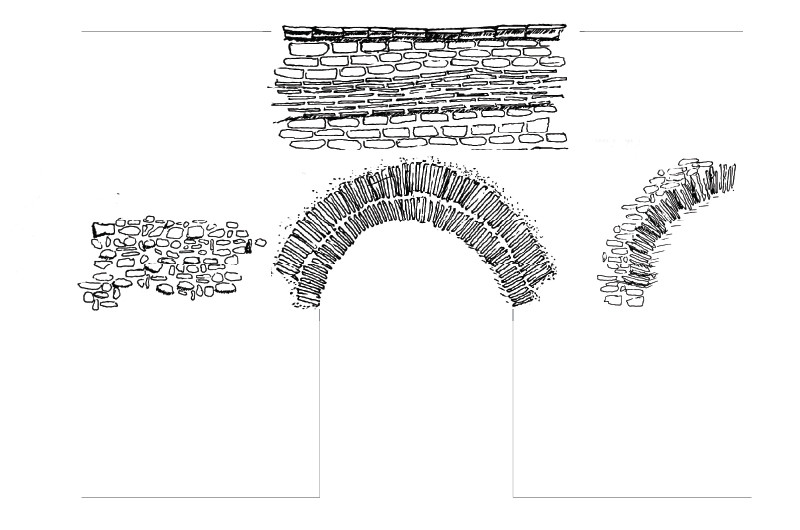
This project approaches the Valens Aqueduct in Istanbul not as a single monumental wall but as a patchwork assembled across centuries. Close observation, supported by on site photography, makes the seams between building phases legible: Byzantine ashlar in even küfeki limestone, with brick reserved for the water channel at the crown; more varied Ottoman repairs that alternate thin brick bands with stone and, in leaner periods, expose rougher rubble cores; and contemporary stabilization in concrete blocks that echo the Roman scale while remaining visually distinct. Read together, these layers record the social, political and environmental pressures that have repeatedly called for the aqueduct's repair, turning the structure itself into the most direct source of knowledge about its own past.
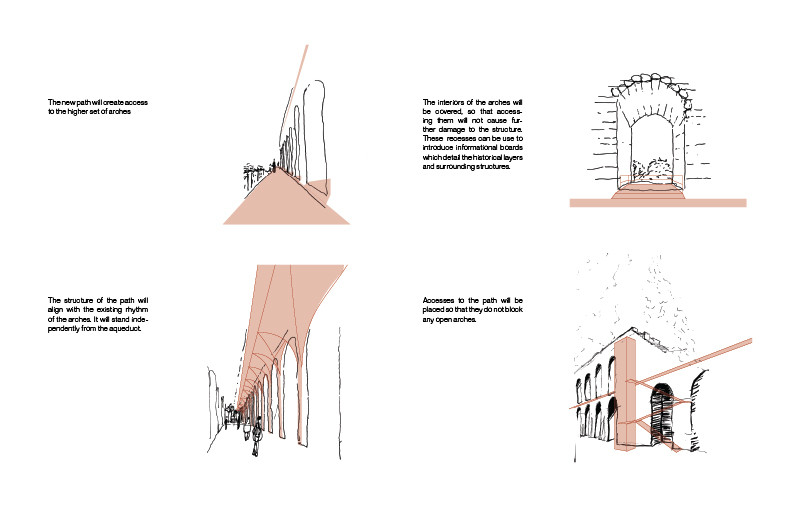
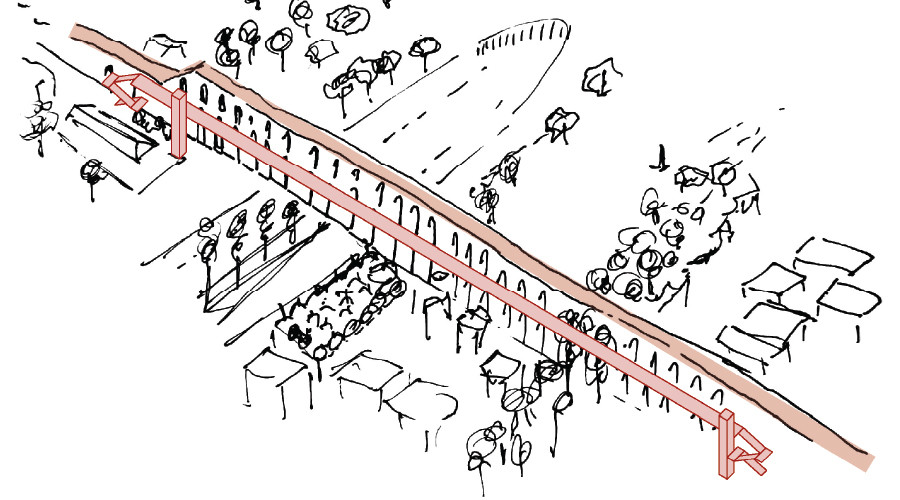
The conservation strategy that follows is grounded in the monument's principal values and risks from seismic vulnerability and climate driven weathering to pollution and the slow erosion of mortar. Its priority is to preserve the existing fabric and prevent further degradation, keeping the historical layers legible rather than obscuring them with new additions, supported by a digitalization, analysis and preservation workflow that uses survey-based 3D modelling and structural testing to guide targeted, reversible interventions. A second proposal extends this logic into the public realm: an independent elevated path, aligned with the rhythm of the arches but structurally separate from the aqueduct, would open the higher arcades to visitors while protecting vulnerable surfaces from wear and rainwater, with covered recesses doubling as in place interpretation. The aim throughout is to keep the aqueduct accessible as shared public infrastructure, woven into everyday urban life rather than fenced off from it.
- Course:Arc 323
- Lecturer:Zehra İrem Türksezer
- Student:Rani Simcic