Valens Aqueduct Restoration Proposal
- architecture
A Restoration and Preservation Strategy for the Valens Aqueduct
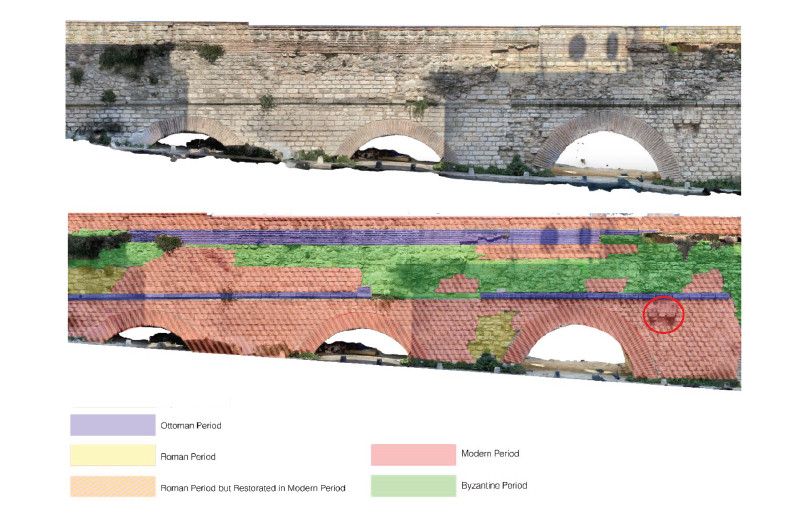
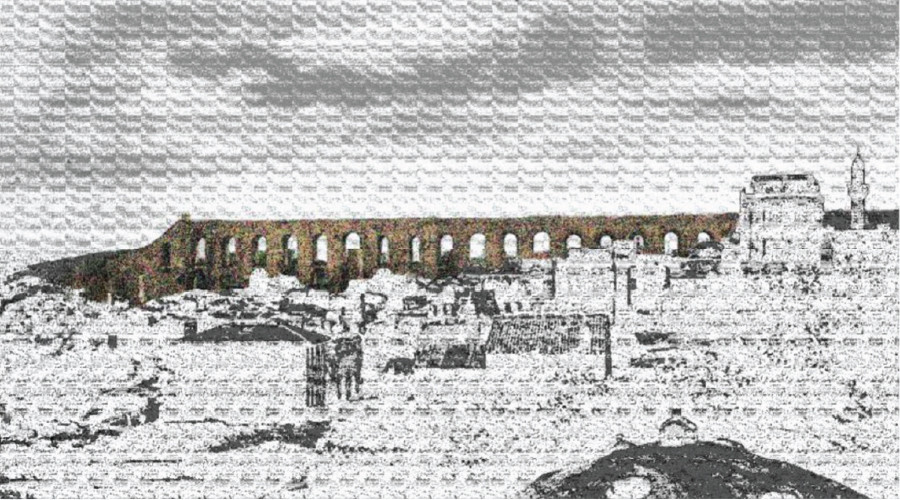
This project reads the Valens (Bozdoğan) Aqueduct in Istanbul as a layered record of the city's long relationship with water and power. Built under Emperor Valens in the fourth century as part of a long-distance supply system reaching some 250 kilometers into Thrace, the aqueduct was repaired, extended and reinterpreted across the Byzantine and Ottoman centuries, and today survives as a 971-meter monument caught between archaeological remain and active urban infrastructure, with Atatürk Boulevard running beneath its arches. Through photogrammetric survey and stratigraphic mapping, the study distinguishes Roman ashlar cores, more pragmatic Byzantine brick and stone repairs, localized Ottoman patching, and visually cleaner modern interventions, treating the structure not as a finished object but as an ongoing process of adaptation. Set against the comparative cases of Warsaw's post war reconstruction and the Trans Iranian Railway, the aqueduct emerges as an example of heritage that endures through continuous repair and reuse rather than through the preservation of any single historical state.
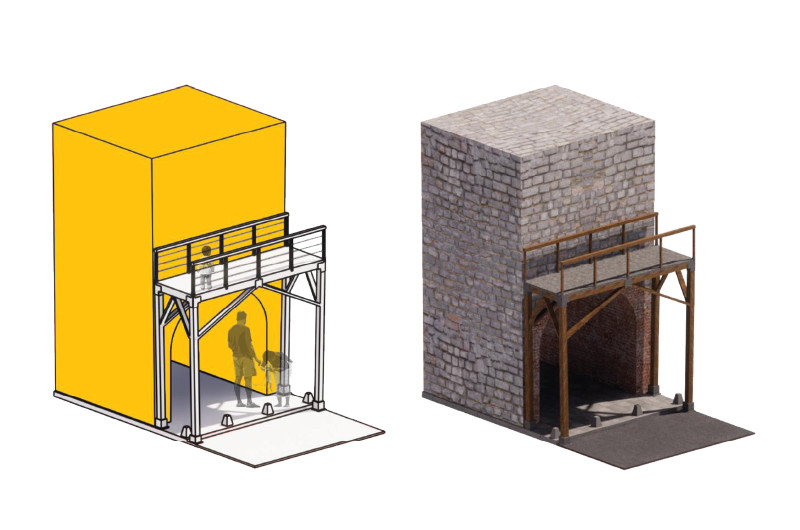
The proposal that follows pairs public engagement with material conservation under a strict reading of international doctrine. A lightweight, modular and fully removable observation platform stands independently beside the monument, transferring no loads to the historic masonry while raising visitors to read its material stratigraphy at close range; its contemporary timber and steel language deliberately distinguishes the new work from the old, in line with Articles 5, 9, 11 and 12 of the Venice Charter. A second strand targets the fabric itself through minimal, reversible and materially compatible measures: biological cleaning, low pressure and poultice-based removal of urban crusts, careful extraction of incompatible cement mortars, lime based repointing, and concealed stitching and tie rodding for seismic resilience. Read together against the Venice and Burra Charters, the ICOMOS structural restoration principles and the Nara Document, the strategy keeps the aqueduct legible, accessible and structurally sound, sustaining its authenticity while returning it to public life as shared civic heritage.
- Course:Arc 323
- Lecturer:Zehra İrem Türksezer
- Student:N. Göksel Dalgıç / Zeynep Öztürk